The Most Beautiful Temples in Chiang Mai and Chiang Rai
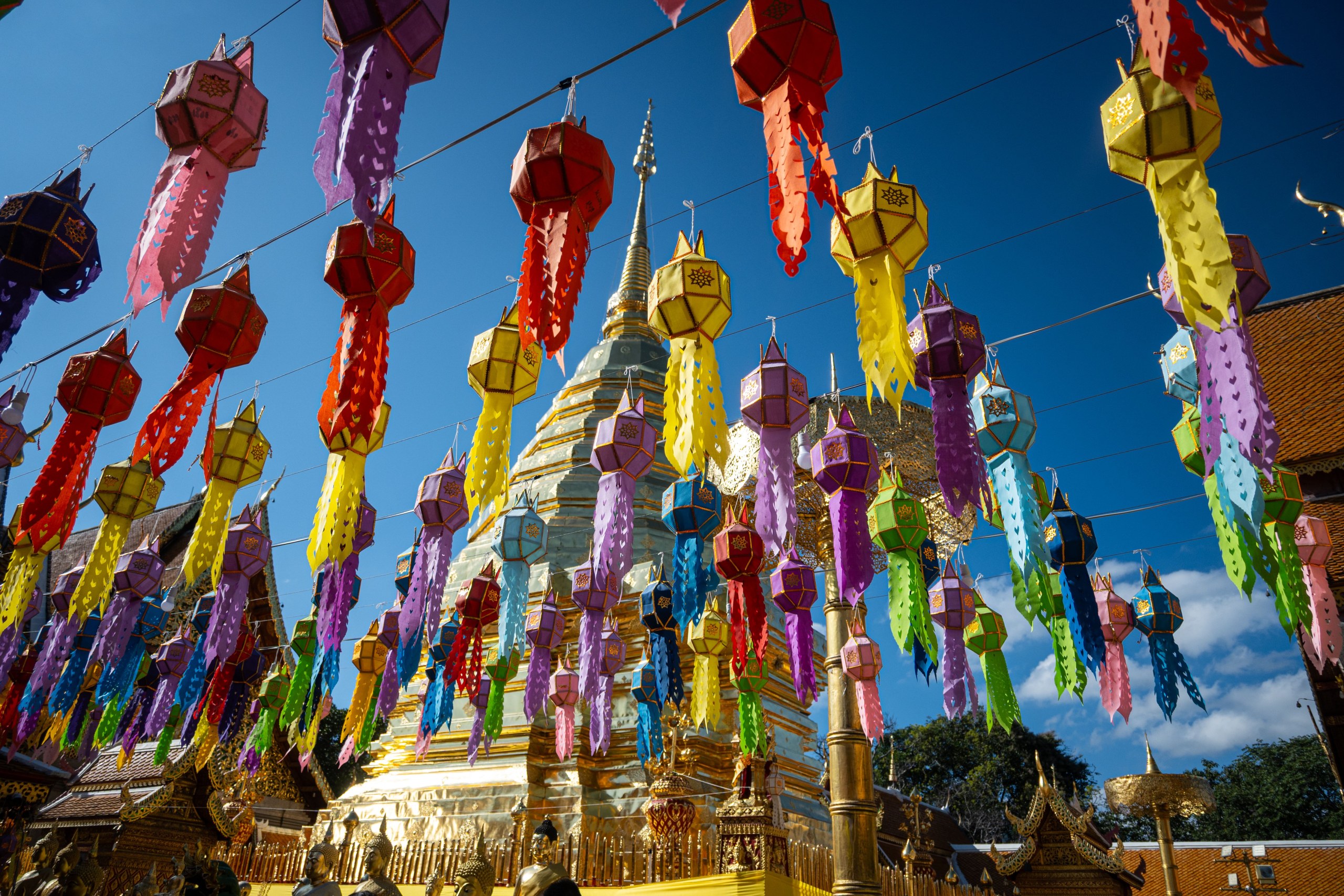
If Bangkok’s temples are the polished, golden classics, the north is where things get gloriously weird and wonderful. Up here you will find a temple carved entirely in white, another drenched in electric blue, one hand-hammered in silver, and a golden shrine perched on a mountaintop with the whole city sprawled below. This is my favorite part of Thailand, and I will fight anyone on it.
We split our time between Chiang Rai and Chiang Mai, so I have split this guide the same way. As always, quick descriptions and heavy on the practical details, because my photos will do the swooning for me.
Just starting to plan? Our Thailand travel guide covers when to go, how to get around, and what to pack. And if you are working your way up from the capital, here are the must-visit temples in Bangkok.
Chiang Rai vs Chiang Mai: A Quick Guide to the North
First, a little orientation, because the two names sound almost identical and travelers mix them up all the time. Chiang Mai and Chiang Rai are two separate cities in the mountainous north of Thailand. Both are packed with temples, and both are worth your time. They sit about three hours apart by car, or a short flight if you would rather skip the drive.
Chiang Mai
Chiang Mai is the larger of the two and the cultural heart of the north. It is a walkable old city ringed by ancient moats and full of temples, markets, cafes, and some of the best food in the country. It is also the base for northern Thailand’s ethical elephant sanctuaries, which for many travelers is the single biggest reason to come to this part of the country at all. A full guide to choosing and visiting them responsibly is on the way (link coming soon). If you want energy, history, and endless things to do, this is your home.
Where We Stayed: Chiang Mai Marriott Hotel
Chiang Rai
Chiang Rai is smaller, quieter, and further north, up near the border where Thailand meets Laos and Myanmar. It moves at a slower pace, yet it punches far above its weight thanks to its surreal modern temples, including the famous White Temple and Blue Temple.
Where We Stayed: Le Meridien Chiang Rai Resort
Chiang Rai historically, came first. It was founded in 1262 and served as the original capital of the Lanna kingdom before Chiang Mai took the crown in 1296. So as you move between the two, you are also moving through centuries of northern Thai history.
My honest advice? If you’ve landed on this guide, you probably already fancy yourself a temple lover and if I’m right on that point, you would regret coming all this way and missing Chiang Rai. Give Chiang Rai a day for its temples, then settle into Chiang Mai for a few more days. Visit the temples, and schedule in some time to visit the elephant sanctuaries. I have laid this guide out the same way we traveled, starting in Chiang Rai and ending in Chiang Mai.
How Many Days Do You Need for the Northern Chiang region?
Plan for three to four days to do the region justice. One full day in Chiang Rai covers the White Temple, Blue Temple, and Wat Klang Wiang comfortably. Give Chiang Mai two days or so for Doi Suthep, the Silver Temple, the markets, and (crucially) the food. Then save a full day for an ethical elephant sanctuary, since most of the good ones run morning to afternoon and are worth building your schedule around. The two cities sit a short flight or a scenic drive apart, so moving between them is easy.
Before You Go: Temple Etiquette in the North
Same golden rules as everywhere in Thailand, so I will keep it quick:
- Shoulders and knees covered, men and women.
- Shoes off before entering any temple hall. Slip-ons, please and thank you.
- Feet tucked away, never pointed at a Buddha.
- Cash for entry. Most northern temple gates do not take cards.
One special note for this region, and it is a big one: at the Silver Temple in Chiang Mai, women are not permitted inside the main hall. More on that below so no one is caught off guard.
Part One: The Temples of Chiang Rai
Chiang Rai is a smaller, calmer city than Chiang Mai, and it punches way above its weight on temples. You can see the highlights in a day, and they could not look more different from one another.
Wat Rong Khun, the White Temple
If you only make time for one temple in the north, make it this one. The White Temple is not ancient. It is the ongoing vision of Thai artist Chalermchai Kositpipat, who started building it in 1997 and is still going. Everything is a blinding, intricate white, embedded with tiny mirror chips that throw sparkles everywhere in the sun. You cross a bridge over a sea of reaching hands to reach the main hall. The whole thing feels like stepping into someone’s beautiful, slightly unhinged dream. Even the (very fancy, very gold) restrooms are a whole moment.
- Entry: 200 THB per person for foreign visitors, cash only. (Heads up: this went up from 100 THB in January 2026.)
- Hours: Open daily, 8:00 AM to around 5:30 PM.
- Dress code: Shoulders and knees covered. Many visitors lean into it and wear white.
- Shoes: Off before entering the main hall. Note: no photography is allowed inside the main hall.
- Time needed: 90 minutes to 2 hours to do it justice.
- Crowd tip: Get there right at 8:00 AM on a weekday. The day-trip buses from Chiang Mai roll in around 10:00 AM, so it fills up fast.
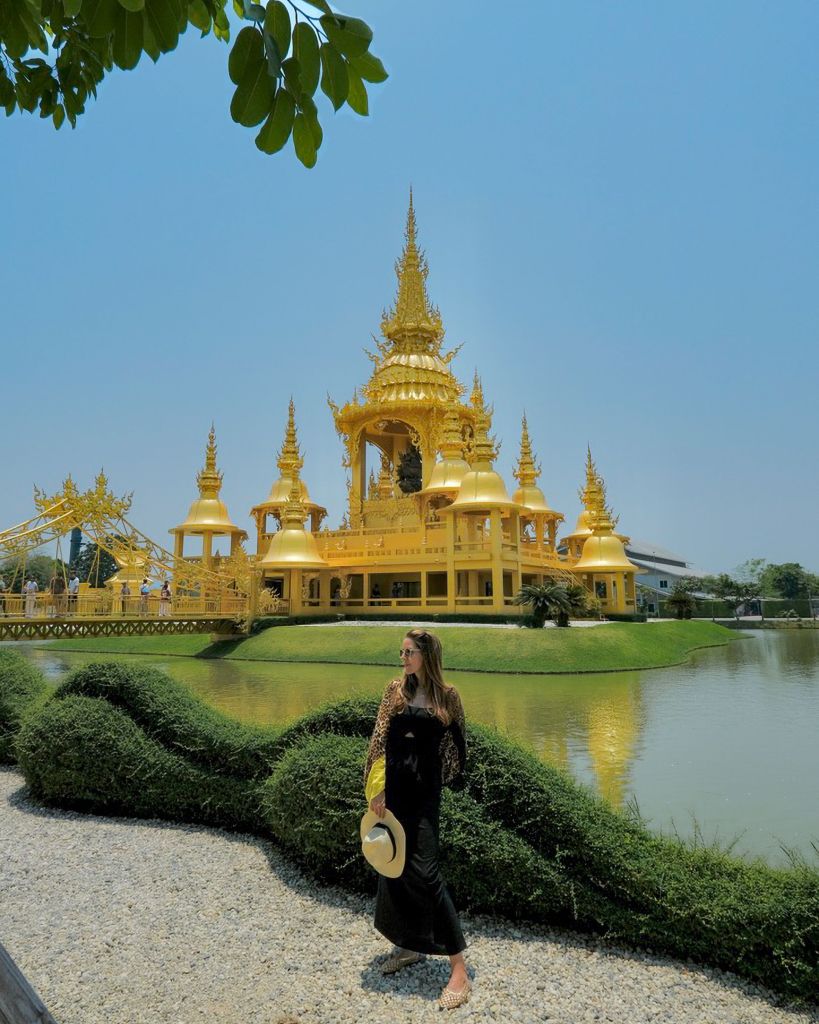
See that golden palace shimmering across the pond? It’s the bathroom. No, really. The artist painted it gold to represent the body and our material cravings, a deliberate contrast to the pure white temple of the mind. It’s routinely called the most beautiful restroom in the world, so yes, this is the one place I’ll tell you to make a toilet stop.
Wat Rong Suea Ten, the Blue Temple
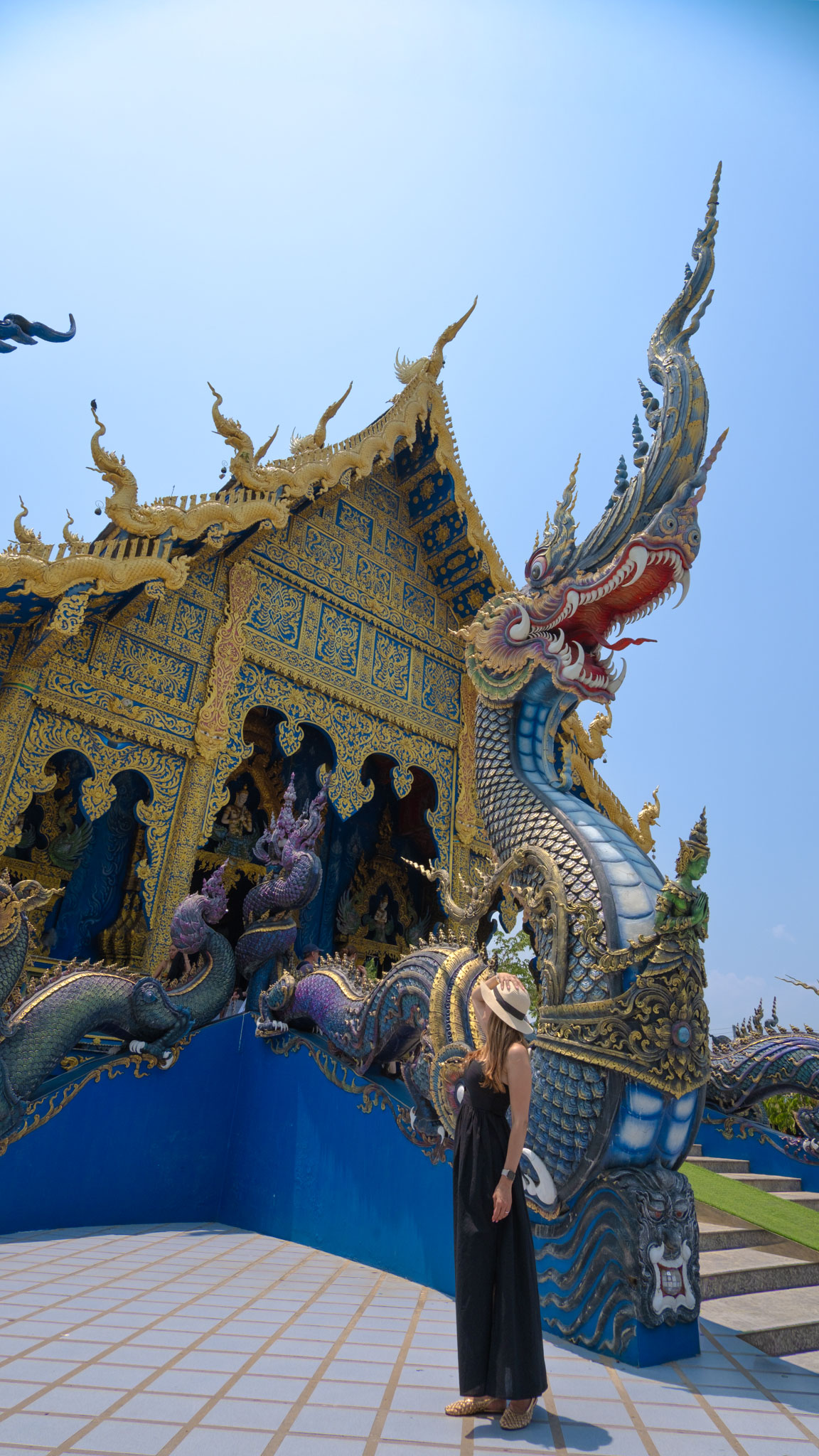
A short hop from the White Temple, the Blue Temple is its cool-toned opposite. Think deep sapphire walls laced with gold, and a serene white Buddha glowing inside the main hall. Where the White Temple is dazzling and busy on the eyes, this one feels almost hushed. It is dreamlike, like being underwater in the best possible way. My husband thought this one was the sleeper hit of the whole trip.
- Entry: Free.
- Hours: Open daily, 7:00 AM to 8:00 PM.
- Dress code: Shoulders and knees covered.
- Shoes: Off before entering the hall.
- Time needed: 30 minutes to an hour.
- Crowd tip: It pairs naturally with the White Temple. I would do the White Temple first thing, then the Blue Temple after, before the midday heat sets in.
Wat Klang Wiang
Right in the center of Chiang Rai city, Wat Klang Wiang is a lovely, ornate temple that blends historical and more modern sections. It is not a bucket-list showstopper the way the White and Blue temples are. But it is genuinely beautiful, easy to reach on foot, and a peaceful place to slow down between the big-ticket stops.
Entry: Free.- Hours: Open daily, roughly 8:00 AM to 8:00 PM.
- Dress code: Shoulders and knees covered.
- Shoes: Off before entering the hall.
- Time needed: 20 to 30 minutes.
- Crowd tip: Easy to fold in while you are wandering the city center. In fact, evenings are quiet and pretty.
Where to Eat in Chiang Rai
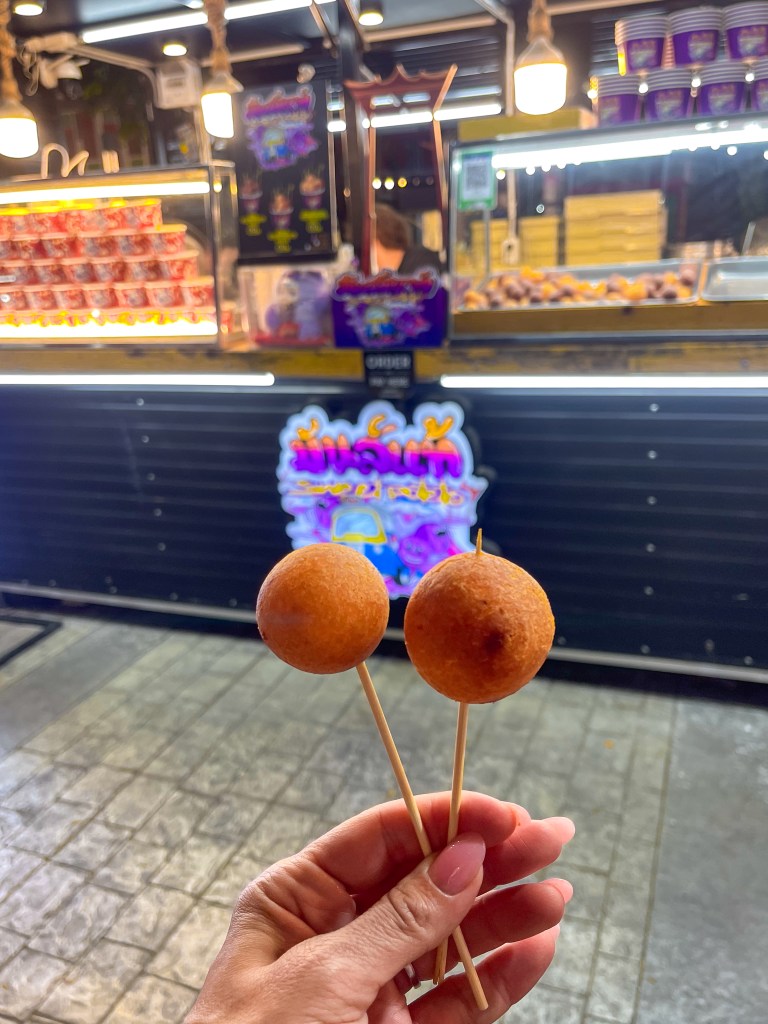
After a day of temples, the Chiang Rai Night Bazaar is the move. It is compact and easygoing, with street food stalls, local crafts, and live music. Exactly the kind of low-key evening I love. Grab a plate, find a seat near the music, and people-watch.
Part Two: The Temples of Chiang Mai
Chiang Mai is the cultural heart of the north, packed with temples, walkable old-city streets, and (my beloved) some of the best food in Thailand. Here are the two that stayed with me.
Wat Sri Suphan, the Silver Temple
Tucked into Chiang Mai’s historic silversmith district, Wat Sri Suphan is hand-crafted in silver and aluminum. Every surface is hammered with intricate Buddhist symbols and Lanna-style detail that shimmers in the light. It is small, but the craftsmanship is extraordinary, and it sits steps from some of the city’s best night markets.
Now the important part, and please read this before you go: women are not permitted to enter the main silver ordination hall. It comes from a centuries-old local tradition, not anything you did. But it does mean that, as a woman, you will admire that main hall from the outside only. The exterior and the rest of the grounds are still very much worth the visit. I just want you walking in knowing this, rather than feeling surprised at the door.

- Entry: The grounds are free; the silver hall is 50 THB.
- Hours: Open daily, roughly 6:00 AM to 6:00 PM, with the hall generally closing around 5:00 to 5:30 PM. There is an evening light-and-sound show a few nights a week.
- Dress code: Shoulders and knees covered.
- Access note: Women may not enter the main silver hall. Everyone can explore the grounds, the workshop, and the exterior.
- Shoes: Off before entering any hall you are permitted to enter.
- Time needed: 30 to 45 minutes.
- Crowd tip: It is right by the Saturday Walking Street market, so time your visit to roll straight into the market afterward.
Wat Phra That Doi Suthep
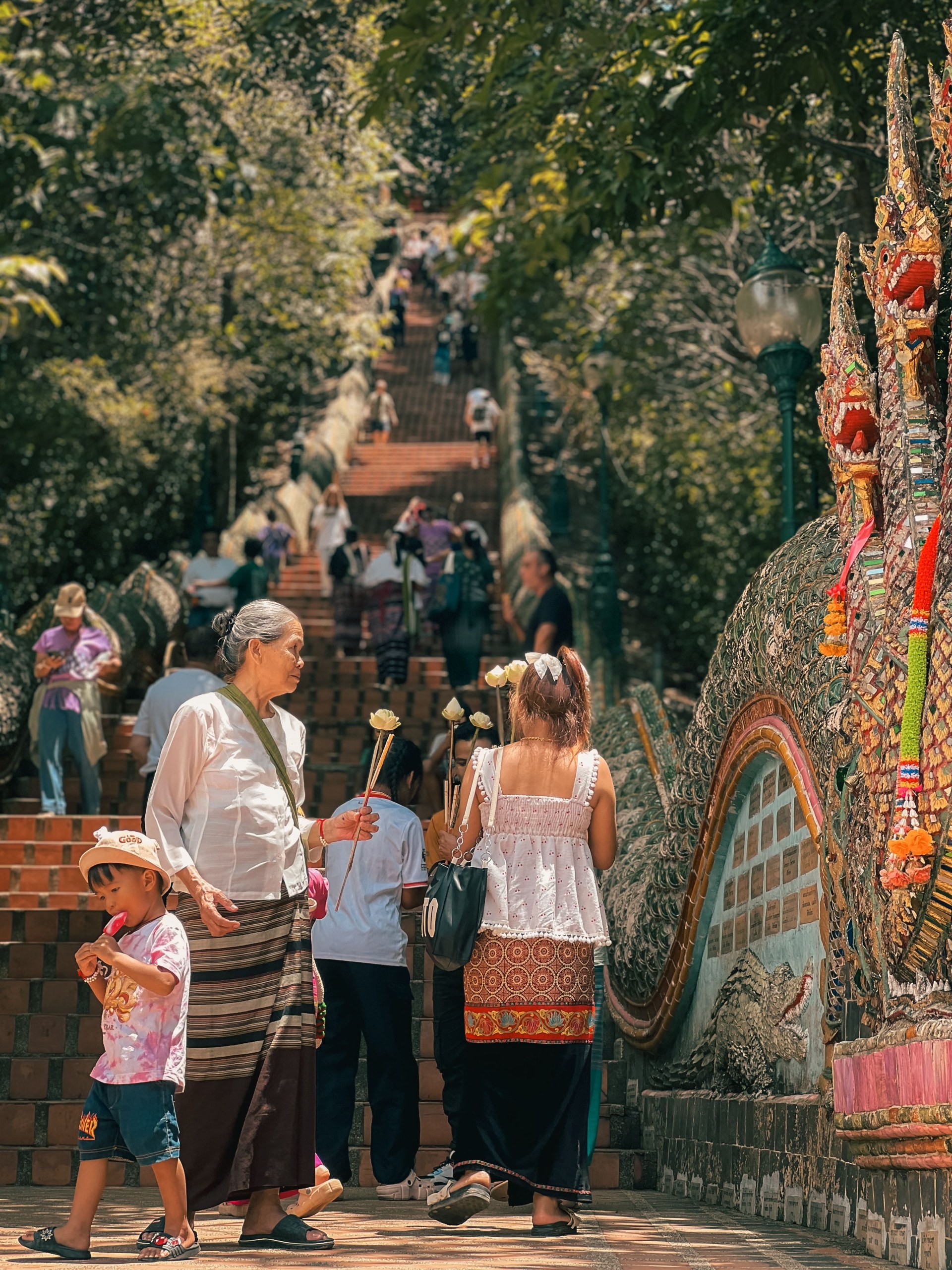
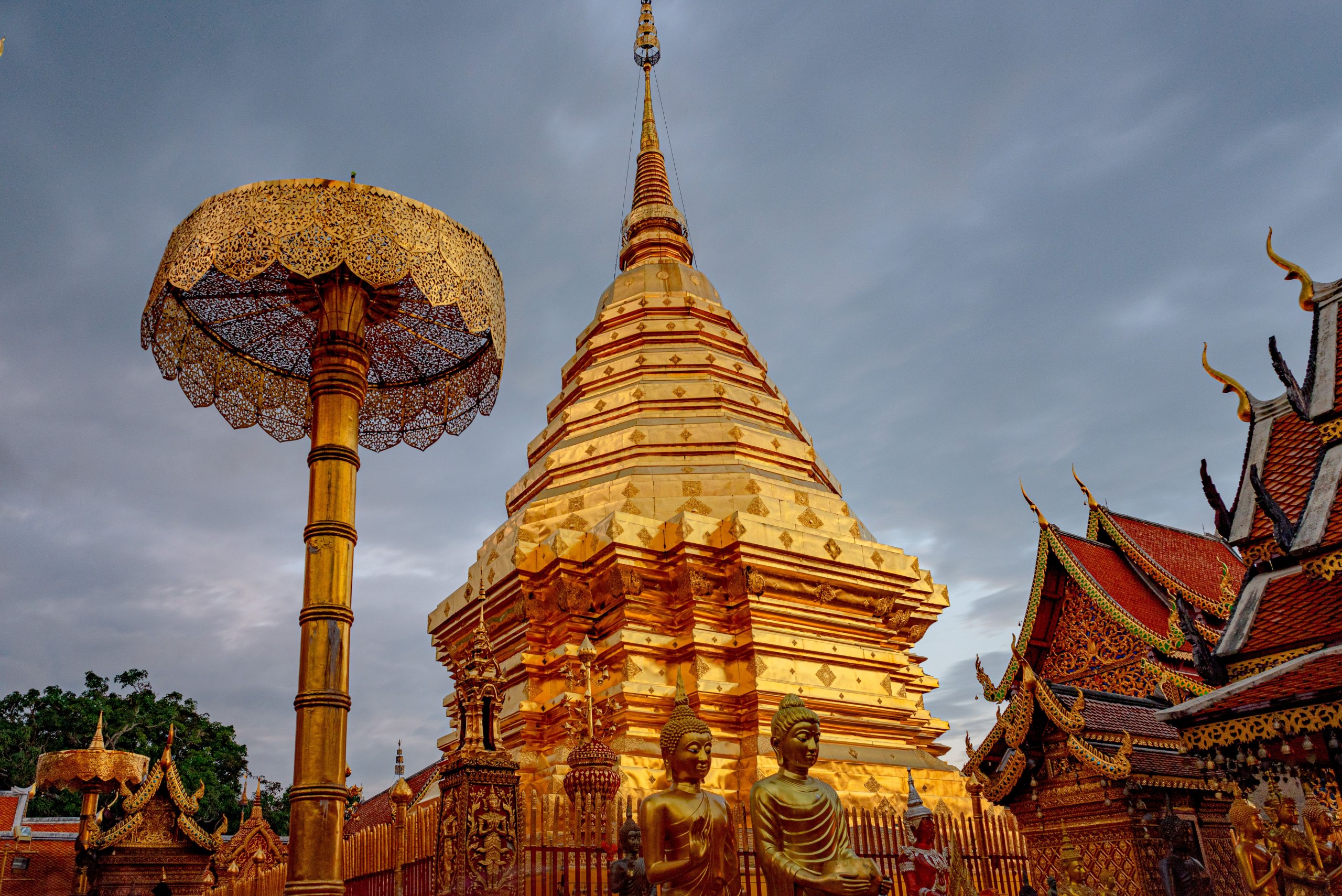
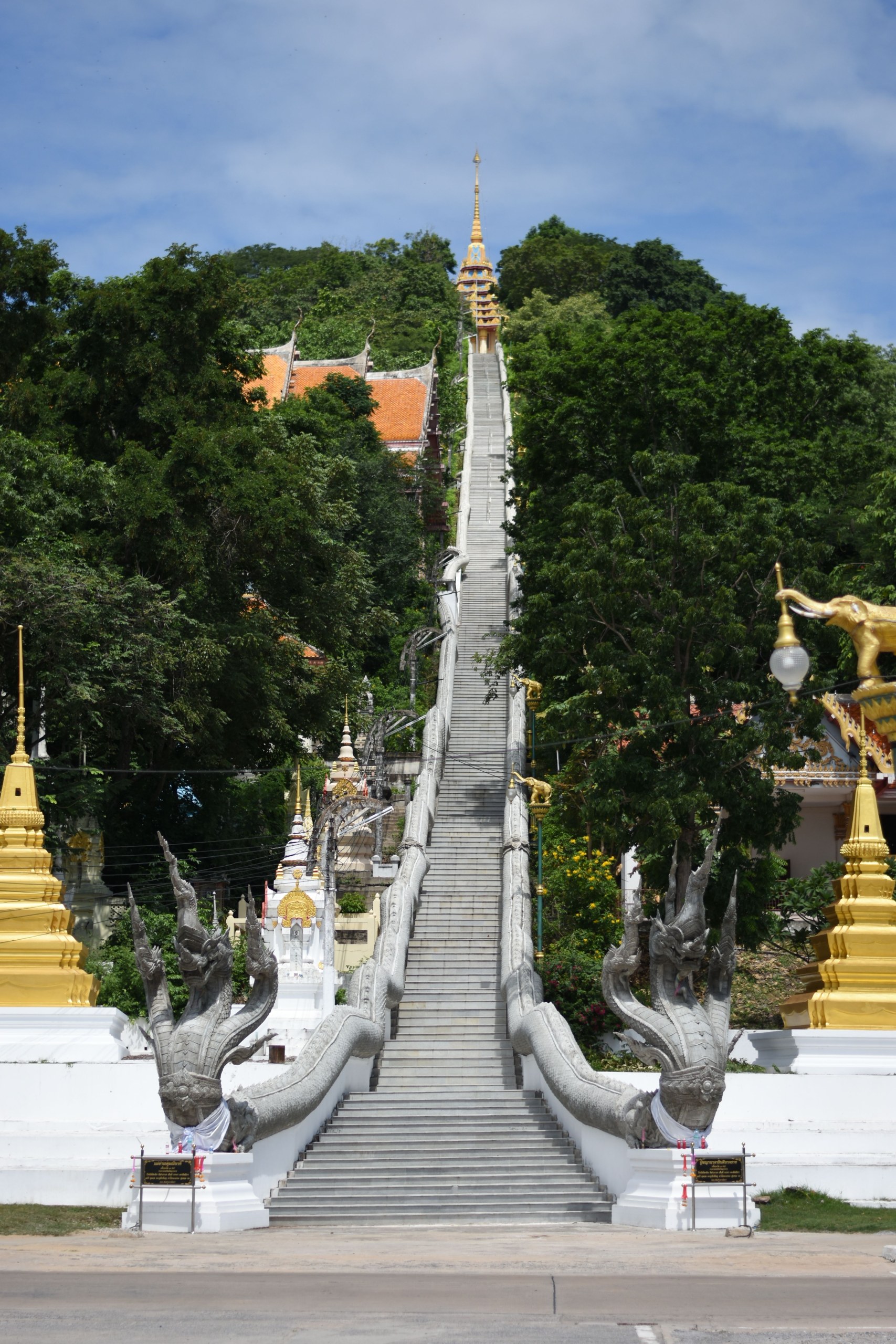
Save the best for last. Doi Suthep sits high on a mountain overlooking Chiang Mai, and reaching it is part of the payoff. You either climb the 300-plus-step Naga staircase, flanked by two enormous serpent guardians. Or take the little tram up, if the legs are not feeling it. At the top: a glittering golden chedi, mountain air, and a sweeping view of the whole city far below. Tradition says to walk clockwise around the chedi three times, and honestly, doing it slowly is the most peaceful I felt on the entire trip.
My husband and I climbed the stairs. My husband would like it noted that the tram exists for a reason.
- Entry: Around 30 THB per person for the temple. (The separate national park fee only applies to waterfalls and camping, not the temple itself.)
- Getting up: Climb the Naga staircase, or take the tram or cable car for a small fee.
- Hours: Open daily, early morning to around 9:00 PM.
- Dress code: Shoulders and knees covered.
- Shoes: Off before stepping onto the inner terrace around the chedi.
- Time needed: 1 to 1.5 hours, plus travel time up the mountain.
- Crowd tip: Go early morning or toward late afternoon. The tour buses cluster midday, and the light on that gold chedi is prettiest at the edges of the day.
Where to Eat in Chiang Mai
You are in the home of khao soi, the rich, coconut-curry noodle dish of the north. So you owe it to yourself to find a bowl. We loved a humble local spot for ours, and I still daydream about it. For a proper sit-down dinner, Tong Tem Toh does classic northern Thai plates (curries, spicy vegetable soups) in a leafy, laid-back setting. And the Chiang Mai Night Bazaar is a fun, sprawling evening of street food, crafts, and browsing.
Northern Thailand Temples FAQ
How much does it cost to visit the temples in Chiang Rai and Chiang Mai? As of 2026: the White Temple is 200 THB, the Blue Temple is free, Wat Klang Wiang is free, the Silver Temple’s hall is 50 THB (grounds free), and Doi Suthep is around 30 THB. Bring cash.
Can women go inside the Silver Temple in Chiang Mai? Women can explore the grounds, workshop, and exterior, but are not permitted inside the main silver ordination hall due to a long-standing local tradition. It is worth visiting regardless.
What time should I visit the White Temple to avoid crowds? Arrive right at 8:00 AM opening on a weekday. Day-trip tour buses from Chiang Mai arrive around 10:00 AM, so the early window is much quieter.
What should I wear to temples in northern Thailand? Cover your shoulders and knees, wear breathable fabrics for the heat, and choose slip-on shoes since you will remove them at each hall. A light scarf is a smart pack.
Is the White Temple or the Blue Temple better? They are completely different and I would not skip either. The White Temple is the dazzling, must-see showstopper; the Blue Temple is the serene, dreamy counterpoint. So do both, since they are close together.
Do you need a guide or a tour for the northern temples? Not strictly. You can reach them by hired car, Grab, or a day tour. A tour is handy for hitting several Chiang Rai temples in one efficient day if you are short on time.
This wraps our northern temple tour. Head back to the full Thailand travel guide for planning basics, revisit the best temples in Bangkok, or trade the temples for the sea with our most romantic getaway in Koh Samui.
Related
Discover more from Cristy Travels
Subscribe to get the latest posts sent to your email.

Chiang Rai vs Chiang Mai: A Quick Guide to the North
Wat Rong Suea Ten, the Blue Temple
Entry: Free.